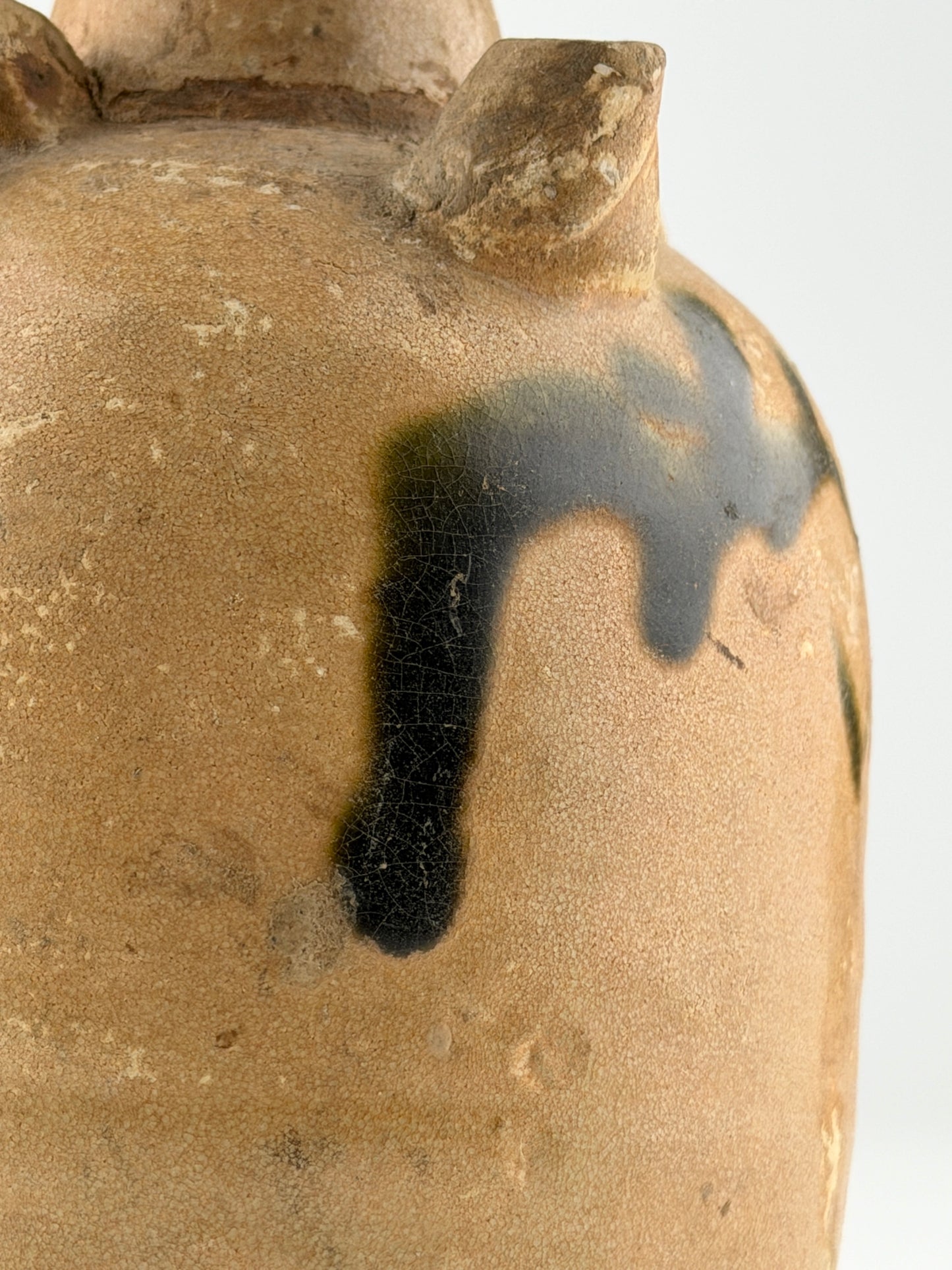
Changsha Ewer, Tang Dynasty
Changsha Ewer, Tang Dynasty
Couldn't load pickup availability
A stoneware ewer with an ovoid body set on a slightly recessed foot, featuring a dish-shaped flaring mouth, a loop handle, and a short pouring spout at the shoulder; the pale buff glaze is decorated with freely flowing iron-brown splashes characteristic of Changsha ware, while surface wear and glaze loss provide evidence of Tang-period firing techniques and long-term burial.
Date : 9th Century
Made in : Hunan province
Dimension : 16cm (Height) x 8cm(Mouth Diameter)
Condition : Good
Provenance : Acquired in late 1990s, Hongkong
* Changsha Ware
Multiple “wares,” or styles, of pottery were developed during the Tang Dynasty. Many of these wares featured sancai glazing, a distinct color palette of lead glazes brushed, dipped, and poured over the vessel. Sancai glazed pottery used three colors derived from minerals: yellow-brown from iron oxide, green from copper oxide, and white from lead. Rarely, ceramicists included cobalt to create a blue glaze, but it was far too expensive for regular use. Changsha Ware is a classic example of a three-color sancai ware. Yet, it is also a style that revitalized ancient Chinese pottery. It was the first time that ceramicists perfected the underglaze painting technique. Artists decorated their clay bowls, jars, and figurines with colorful paintings and delicate calligraphy which were then protected by a transparent coat of lead glaze.
Changsha Ware was produced with distinct and recognizable designs and motifs. Painted designs often depict flowers, vines, and mountain landscapes. Some painting is simply splotches of color that accentuate stamped and molded clay ornaments. Being sold overseas, Changsha Ware integrated foreign cultural elements with traditional Chinese aesthetic principles.
Changsha Ware varies widely in form. To make sense of this variability, objects are typically classified into functional categories such as bowls, pots, ewers (or jugs), plates, boxes, lamps, pillows, candlesticks, censers, water droppers, mortars, paper weights, tea grinders, and figurines. Examples of these forms can be found below.
References : Timothy S.Y. Lam Museum of Anthropology