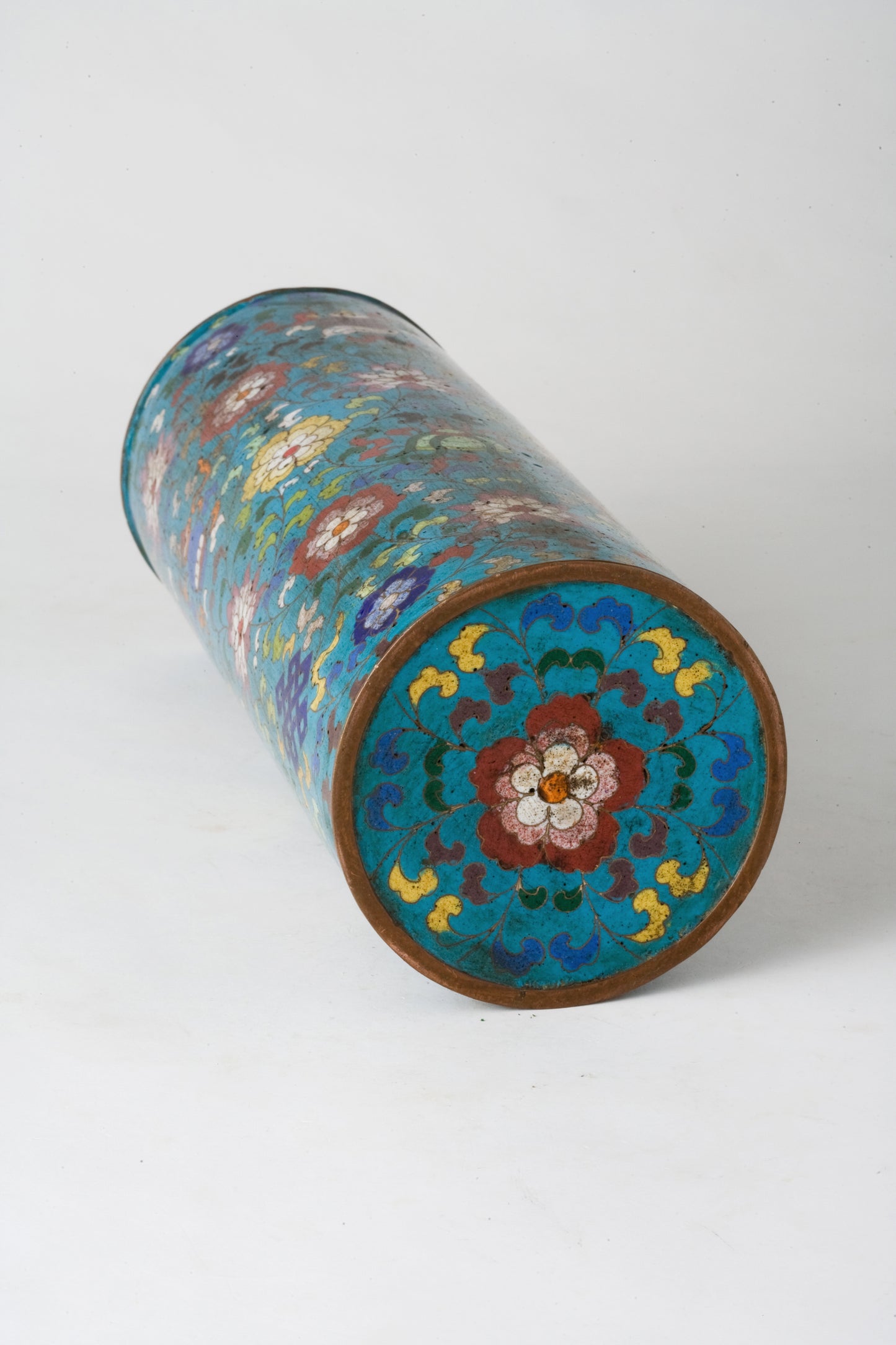
Cloisonné Enamel Vase, Qing Period
Cloisonné Enamel Vase, Qing Period
Couldn't load pickup availability
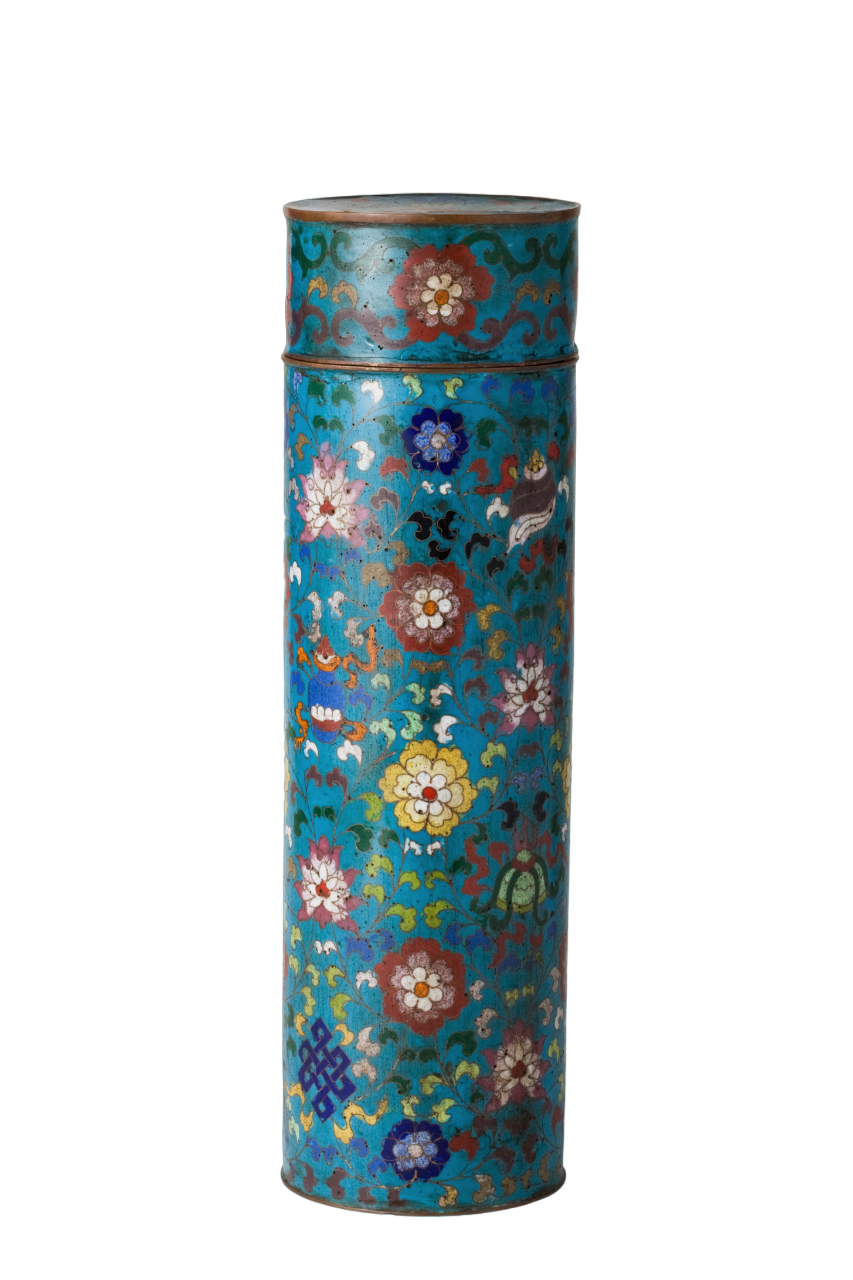
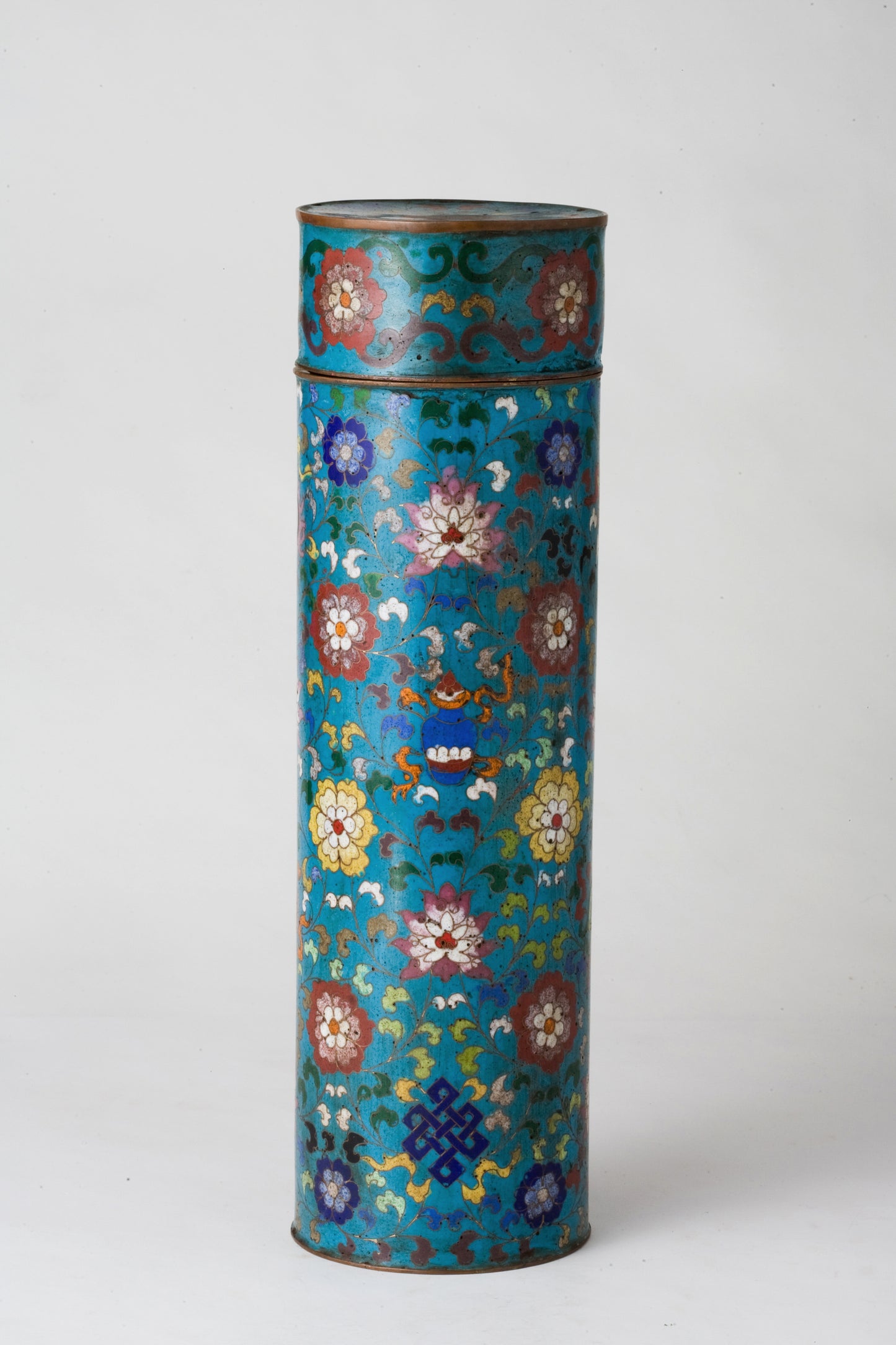
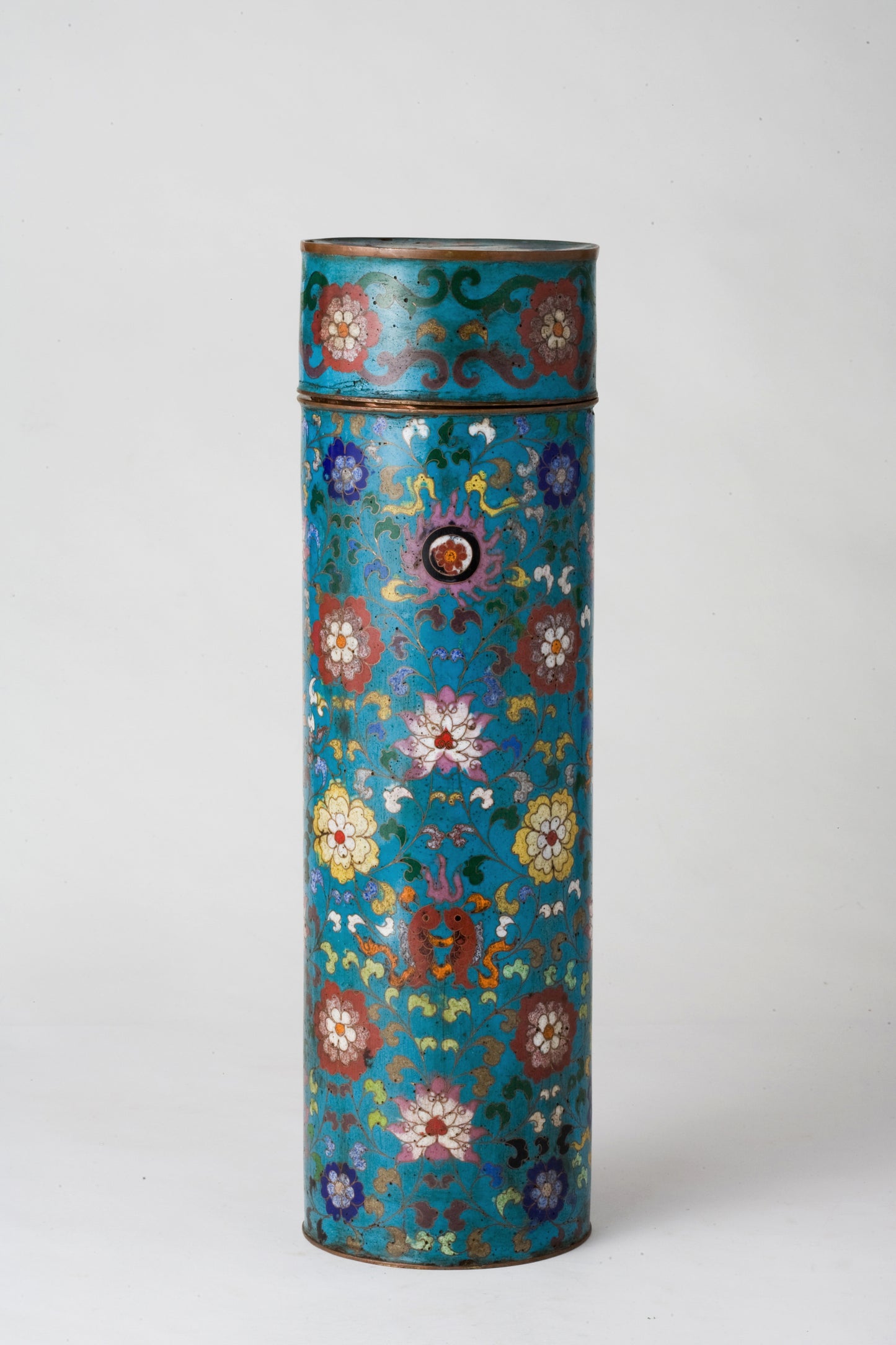
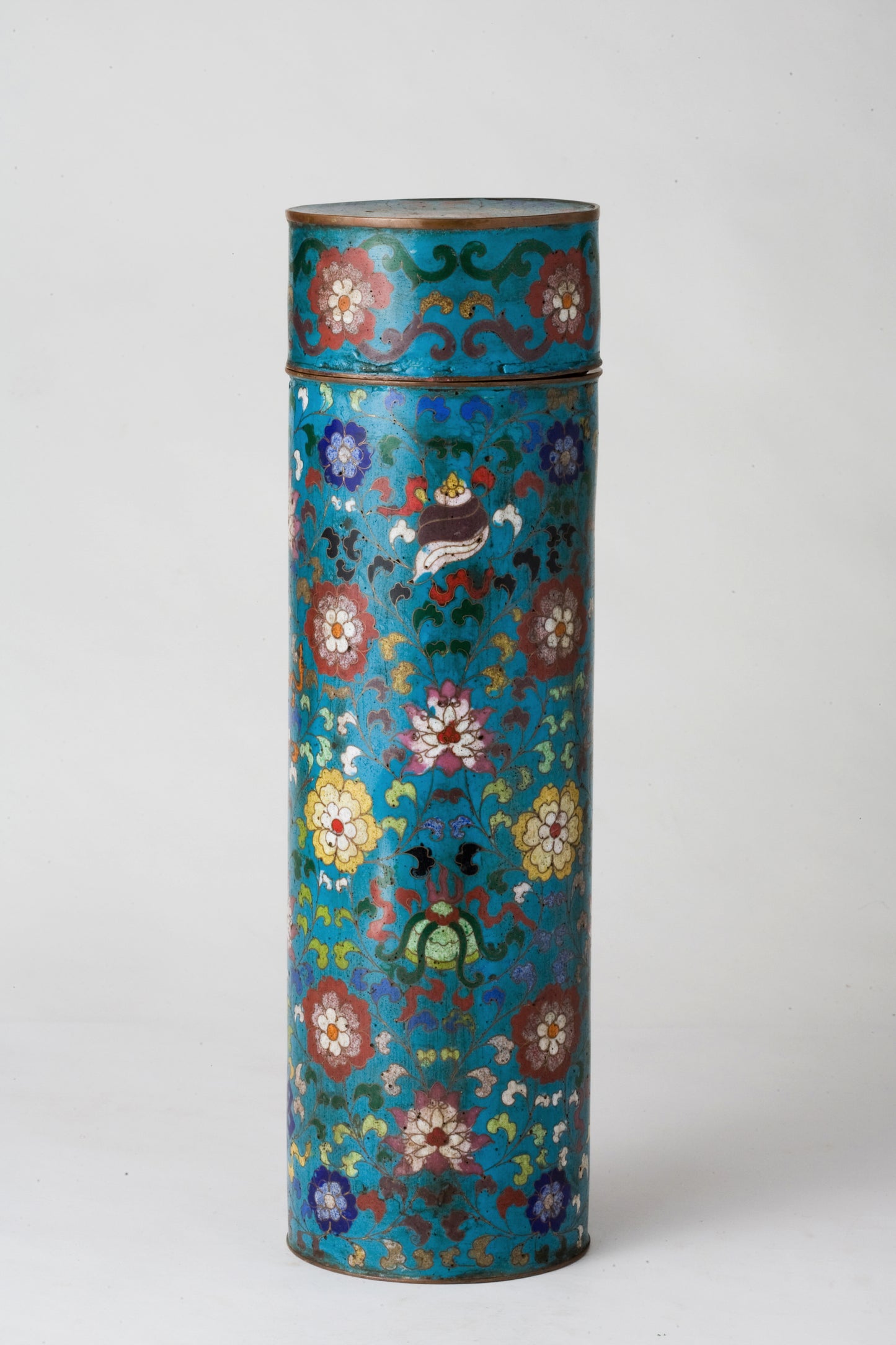
This cylindrical cloisonné vessel is made with a brass body filled with turquoise-toned enamels that are fired to create a vivid, multi-colored surface. The exterior is densely decorated with lotus motifs and various floral patterns, accompanied by traditional auspicious designs that give the piece a rich yet balanced appearance.
The enamel’s texture and sheen, along with the natural oxidation on the metal surfaces, reflect the aging typically seen in older cloisonné pieces. Overall, its style and color palette are consistent with the northern cloisonné tradition. It may date to the mid-Ming period, though it is also possible that it is a later Ming or Qing dynasty piece made in the former dynasty.
Period: Probably around 1920(early 20th century)
Type: Vase
Medium: Cloisonné Enamel
Height: 35.3 cm
Provenance: The piece was acquired in Japanese Gallery in the year mid-2000.
Condition: Excellent, with slight staining
* Cloisonné Enamel
Cloisonné enamel is created by forming compartments on a metal body and filling them with colored enamels that are fired to produce a glossy, durable surface. In assessing such pieces, key factors include the thickness and consistency of the metal wires, the depth and clarity of the enamel colors, the texture and sheen of the surface, and signs of natural oxidation or aging on the metal. These features help determine both the period of manufacture and the level of craftsmanship.
In addition, the arrangement of motifs, overall proportion, base finishing, and color composition are essential for identifying the production region and stylistic lineage. Northern cloisonné typically shows deeper tones and more balanced, formal layouts, while southern cloisonné tends to favor brighter palettes and more decorative designs. Evaluating these elements collectively is central to determining authenticity, quality, and dating in cloisonné enamel works.