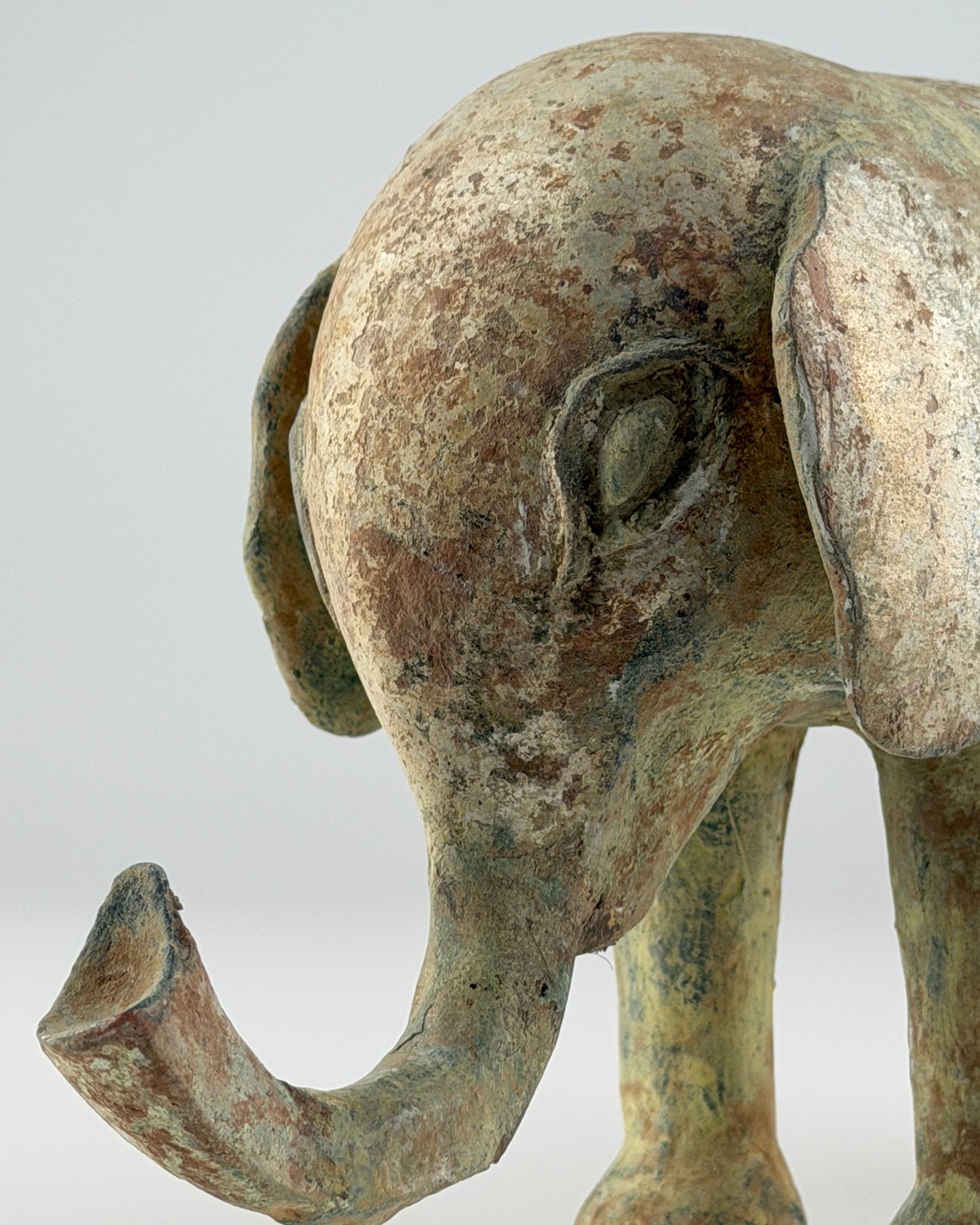
Green-Glazed Pottery Elephant, Han dynasty
Green-Glazed Pottery Elephant, Han dynasty
Couldn't load pickup availability
This green-glazed pottery elephant dates to the Han dynasty, a period in which representations of elephants in Chinese art were uncommon. Elephants, once present in parts of Central and Southern China, appear occasionally in archaeological records of the period. The figure is modeled standing with a curved trunk, simplified facial features, cylindrical legs, and a mottled green lead glaze. Elephant-shaped examples are particularly scarce among green-glazed animal figures, placing this work within the limited corpus of known Han dynasty funerary sculptures. Comparable examples include a bronze elephant in the Shanghai Museum.
Period : Han Dynasty (206 BC - 220 AD)
Type : Animal statue
Medium : Green glazed pottery
Height : 14cm
Provenance : The piece was acquired in Hong Kong in late 1990s.
Condition : Good (Repairs on front leg, mouth and tail)
Reference : Asian Art Museum San Francisco - Object number B81P51 - Dog with harness
(type : closely related)
https://searchcollection.asianart.org/objects/2605/dog-with-harness
* Han Dynasty Pottery
Han Dynasty pottery, originating from one of China's most significant historical periods (202 BCE – 220 CE), is renowned for its technological and artistic achievements in ceramic production. These artifacts typically feature a distinctive green glaze, although other colors were also used. The pottery often includes intricate decorative motifs, such as animals, mythological figures, and geometric patterns.
The craftsmanship during the Han Dynasty was advanced, with pottery techniques that were innovative for the time. These pieces were not only utilitarian but also held ceremonial and symbolic significance. The shapes and designs of Han Dynasty pottery vary, including items like urns, vases, and figures, reflecting both the daily life and the spiritual beliefs of the period