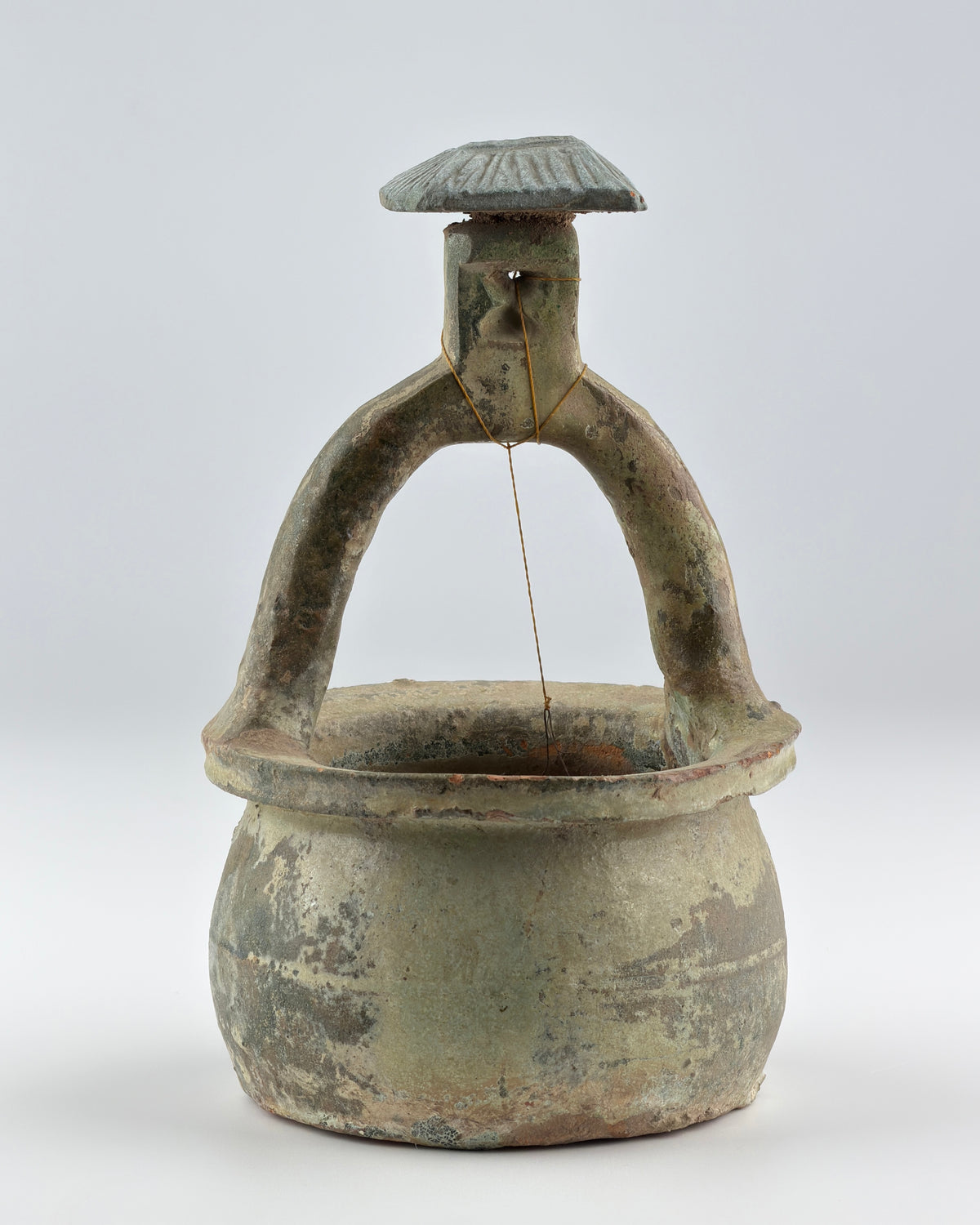
Model of a well with Bucket, Han Dynasty
Model of a well with Bucket, Han Dynasty
Couldn't load pickup availability
Green-glazed(lü you) pottery model of a well, Han Dynasty. The piece takes the form of a wide-mouthed jar representing the well shaft, surmounted by an arched frame and a conical, roof. The body displays a silvery, iridescent surface weathering, a characteristic degradation pattern caused by the oxidation and flaking of lead content in the glaze over long burial. The unglazed footring reveals the original buff clay body and shows concentric throwing marks consistent with wheel-forming.
Period : Han Dynasty (206 BC - 220 AD)
Medium : Earthenware with Green glaze
Dimension : 15cm(Diameter) x 20cm(Height)
Provenance : The piece was acquired in Hong Kong in late 1990s.
Condition : Good(The roof-to-post junction shows an reattachment, apparently occurring during or after burial.)
Reference :
1) Parismusee - Puits - Numéro d’inventaire: M.C. 6329
https://www.parismuseescollections.paris.fr/fr/musee-cernuschi/oeuvres/puits-3
2) The MET - Model of Wellhead with Bucket - Object Number: 2000.662.12a, b
https://www.metmuseum.org/art/collection/search/49532
3) The National Museum of Asian Art - Tomb model of a well with three bird figures - Accession Number S1992.83
https://asia-archive.si.edu/object/S1992.83/
4) Chrysler Museum of Art - Object number44.17.9
https://chrysler.emuseum.com/objects/7210/funerary-model-in-the-form-of-a-well-head
5) Asian Civilisations Museum Accession No. C-1225
https://www.roots.gov.sg/collection-landing/listing/1000521
* Han Dynasty Pottery
Han Dynasty pottery, originating from one of China's most significant historical periods (202 BCE – 220 CE), is renowned for its technological and artistic achievements in ceramic production. These artifacts typically feature a distinctive green glaze, although other colors were also used. The pottery often includes intricate decorative motifs, such as animals, mythological figures, and geometric patterns.
The craftsmanship during the Han Dynasty was advanced, with pottery techniques that were innovative for the time. These pieces were not only utilitarian but also held ceremonial and symbolic significance. The shapes and designs of Han Dynasty pottery vary, including items like urns, vases, and figures, reflecting both the daily life and the spiritual beliefs of the period