Rare Copper-Red and White 'Dragon' Pear-Shaped Vase (Yuhuchunping) Qing Dynasty Early Period, in the Yuan–Ming Style With Inscription in Underglaze Blue
Rare Copper-Red and White 'Dragon' Pear-Shaped Vase (Yuhuchunping) Qing Dynasty Early Period, in the Yuan–Ming Style With Inscription in Underglaze Blue
Couldn't load pickup availability
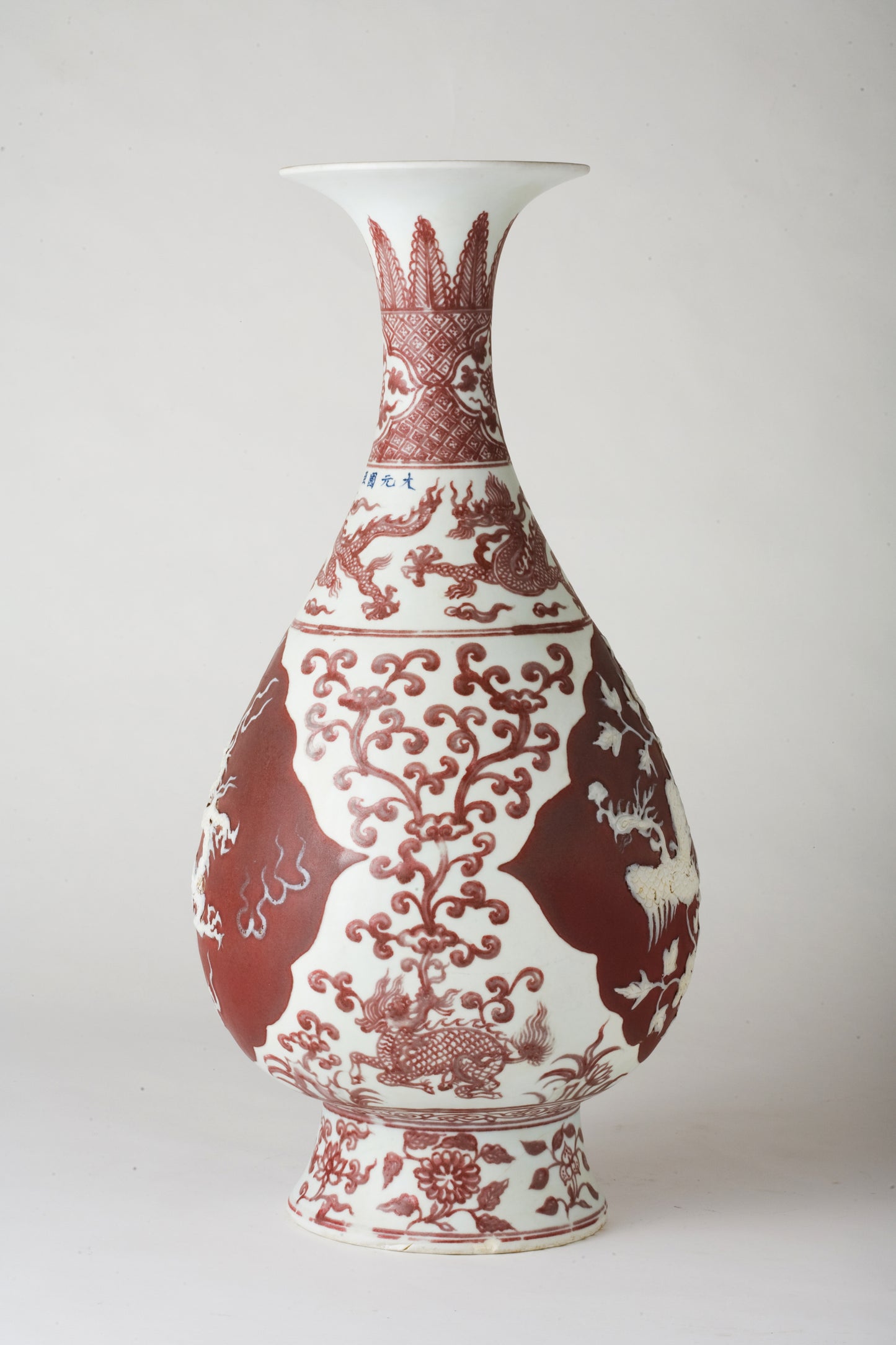
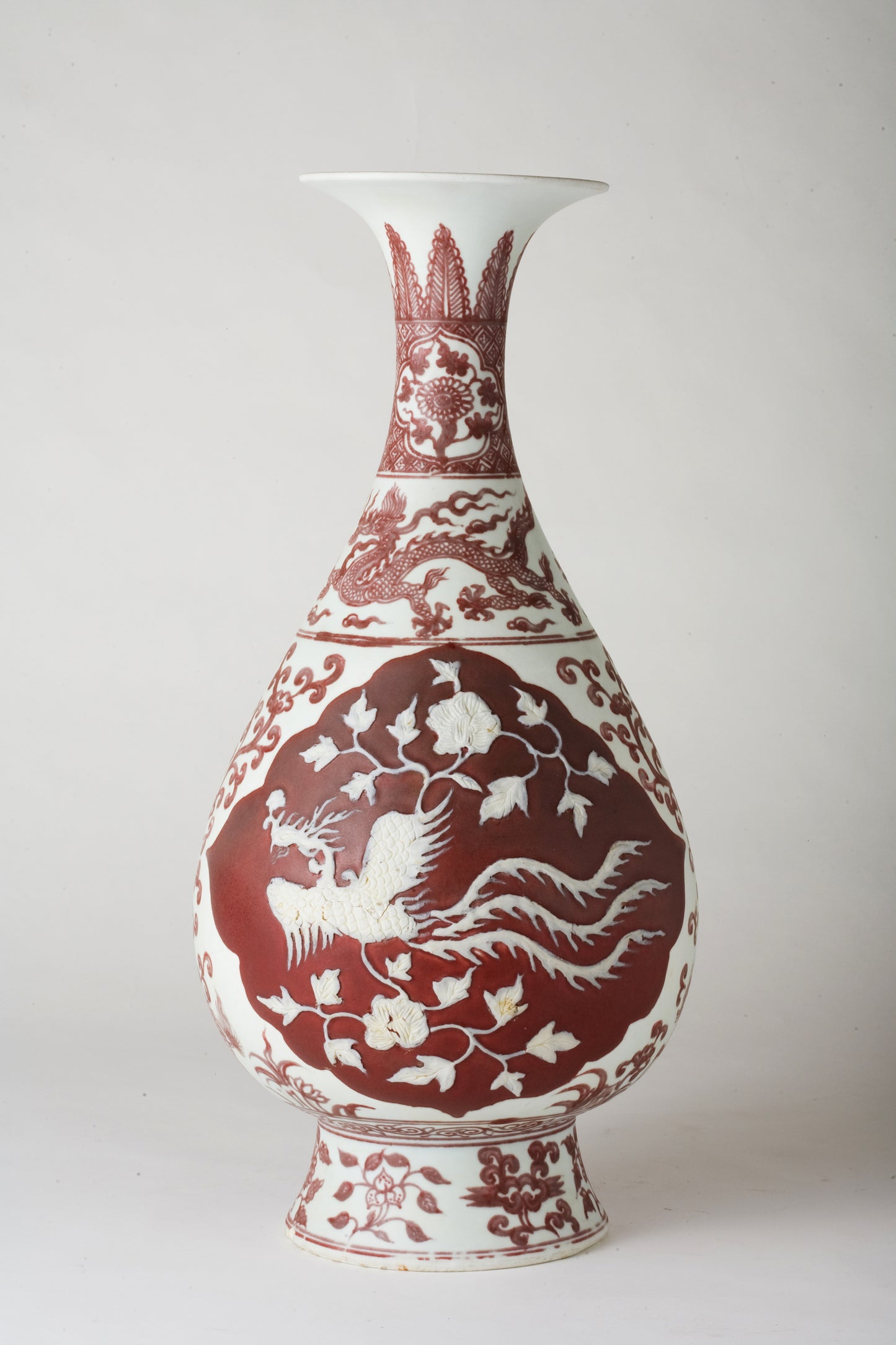
A pear-shaped vase of classic yuhuchunping form, decorated in a technically ambitious combination of underglaze copper-red (youli hong), reverse white, and underglaze blue — three distinct ceramic techniques deployed on a single vessel with considerable mastery.
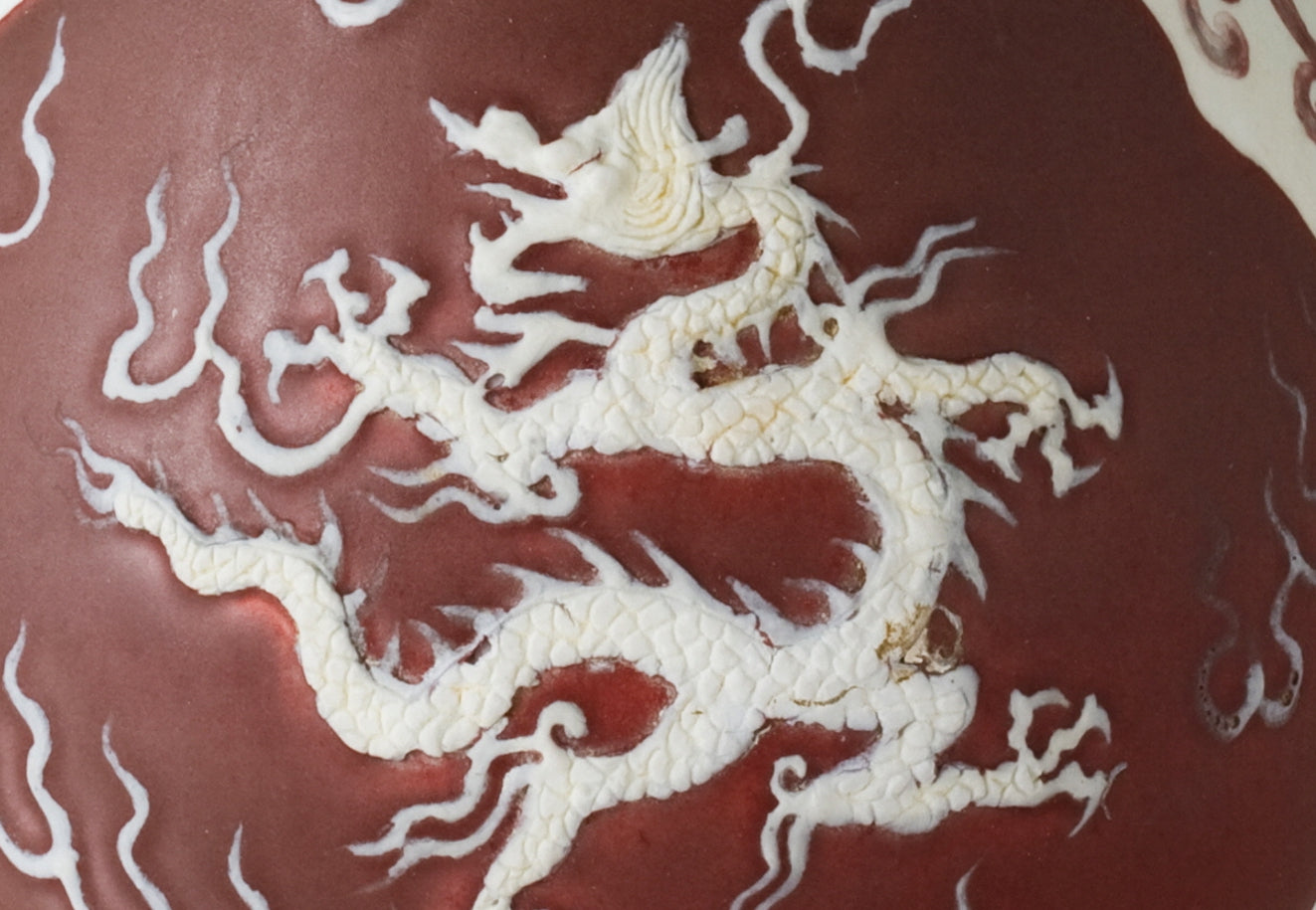
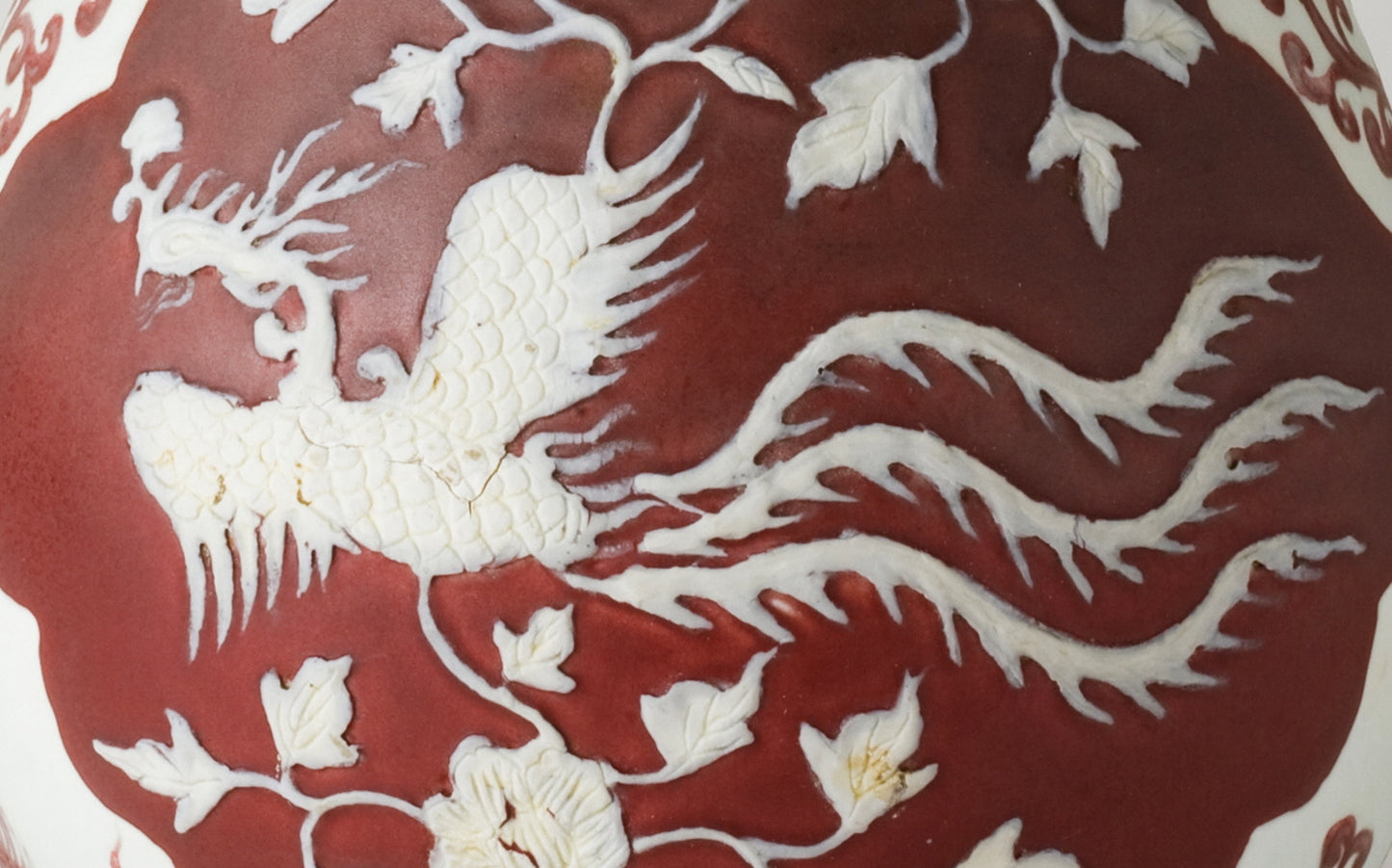
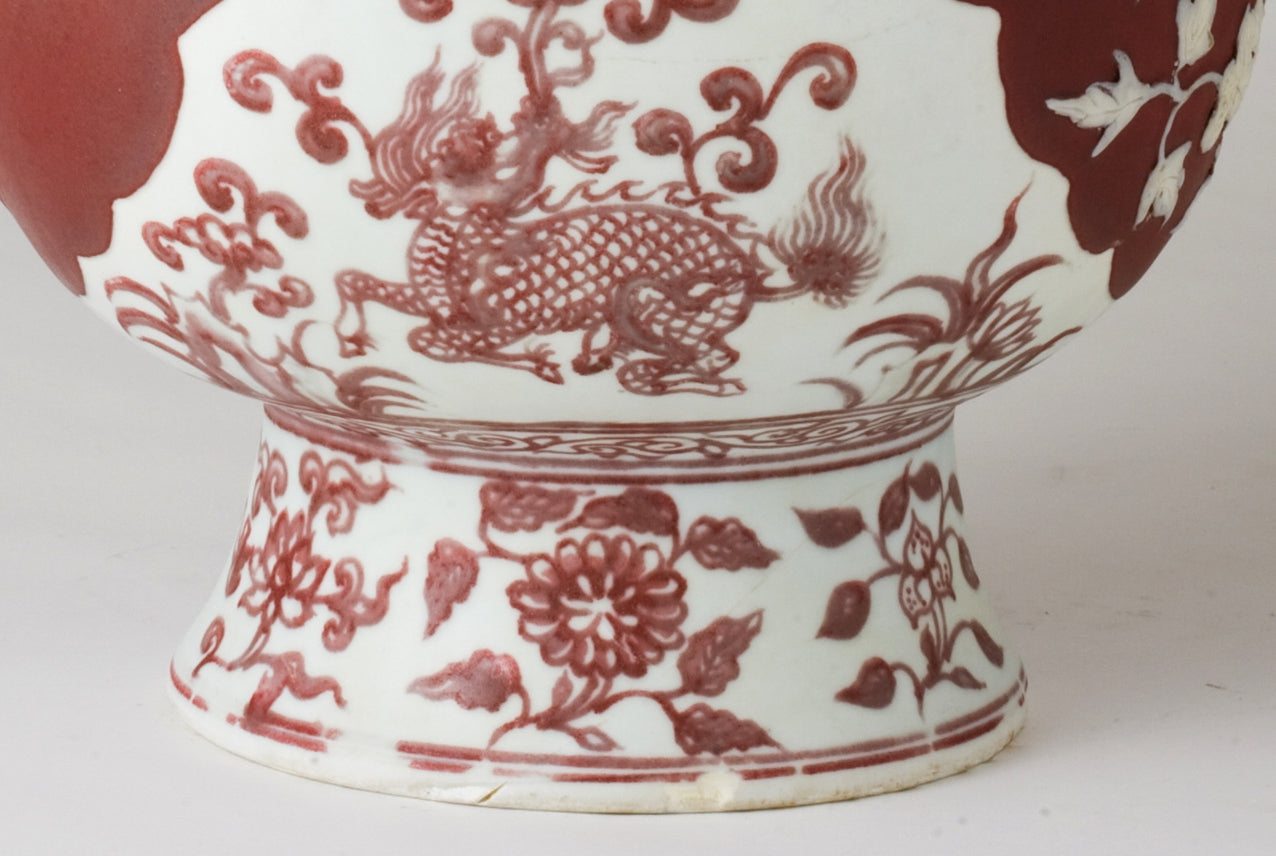
The globular body is dominated by two large circular medallions, each reserved in white against a deep, evenly fired copper-red ground, enclosing a vigorously rendered dragon. The copper-red achieves a rich, saturated tone with minimal blurring or oxidation loss — a mark of exceptional kiln control, given the extreme sensitivity of copper pigment to firing temperature and atmosphere. Between the medallions, floral scrolls are painted directly in copper-red on white, demonstrating equal fluency.
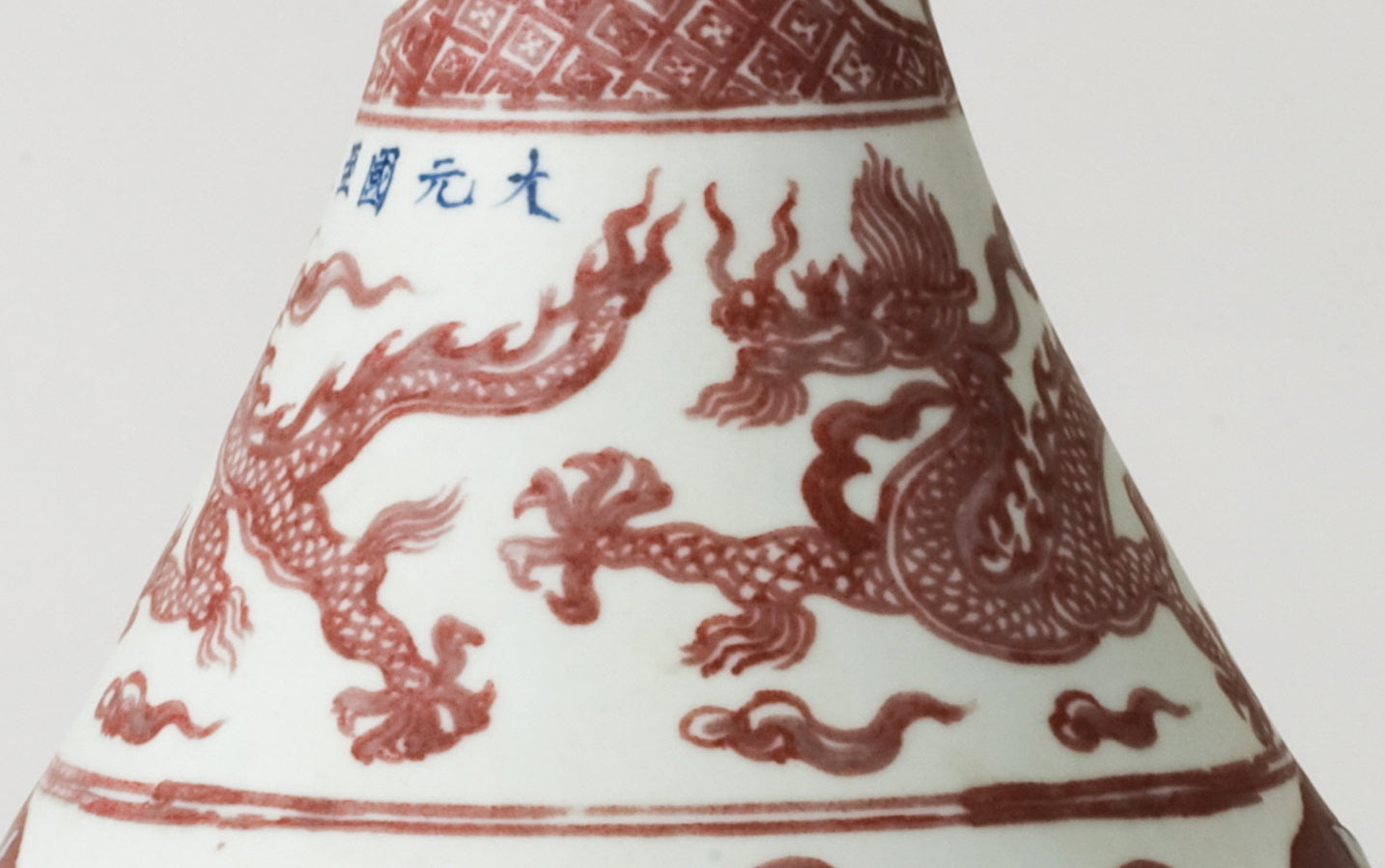
The tall conical neck carries two further dragons in fine copper-red line work, with scaled bodies, articulated claws, and flame manes rendered with confident brushwork. A band inscription below the neck is applied in underglaze blue — a deliberate chromatic contrast against the otherwise monochrome red-and-white scheme:
大元國至正八年 "The eighth year of the Zhizheng era of the Great Yuan Dynasty"
The sole use of blue for this inscription elevates it beyond a conventional date mark. The explicit invocation of a Yuan imperial reign year declares this vessel's conscious alignment with the Yuan–Ming imperial ceramic tradition, reflecting the cultural self-awareness that persisted among Jingdezhen craftsmen working within the fanggu archaizing current of the early Qing period.
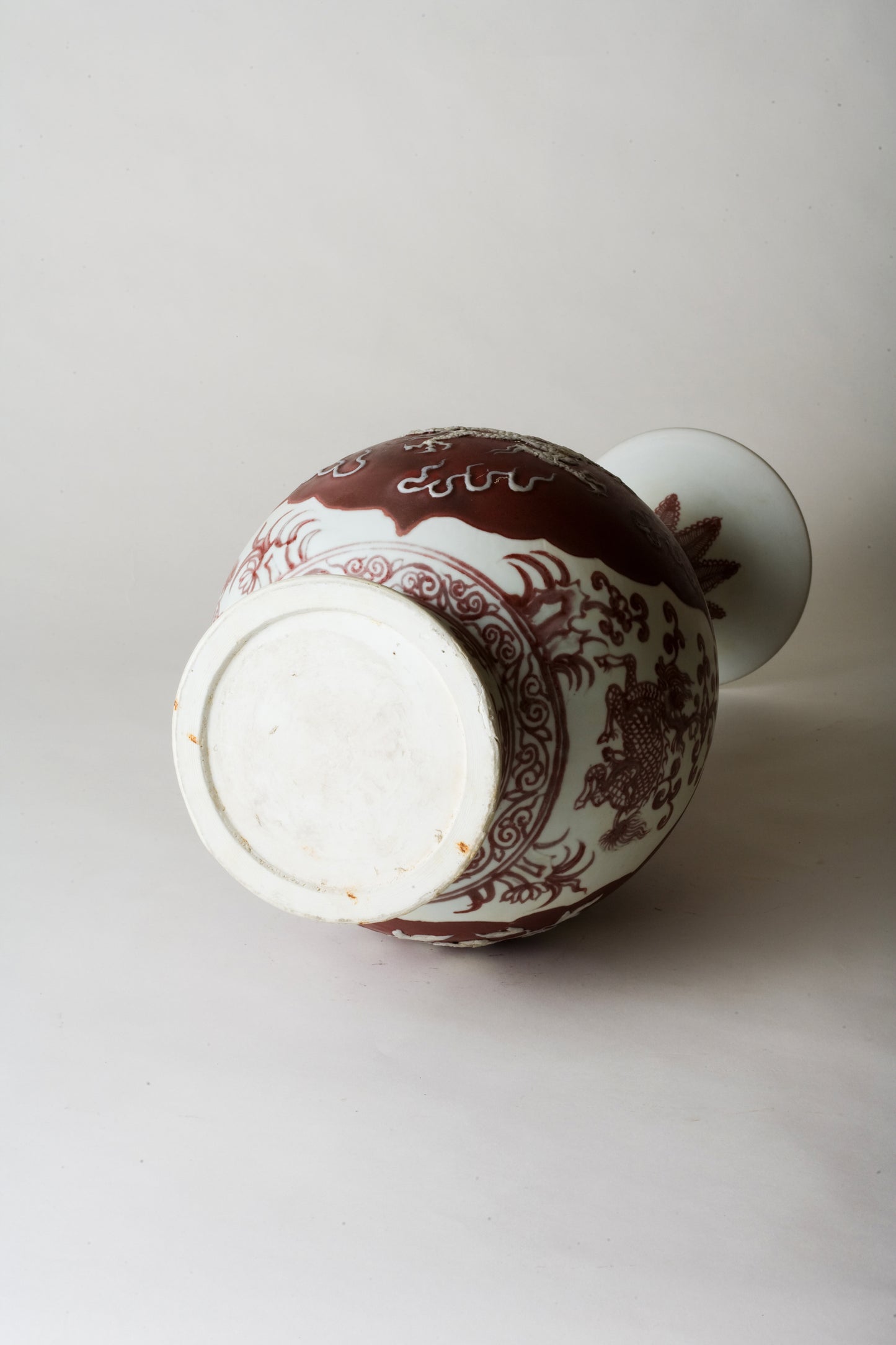
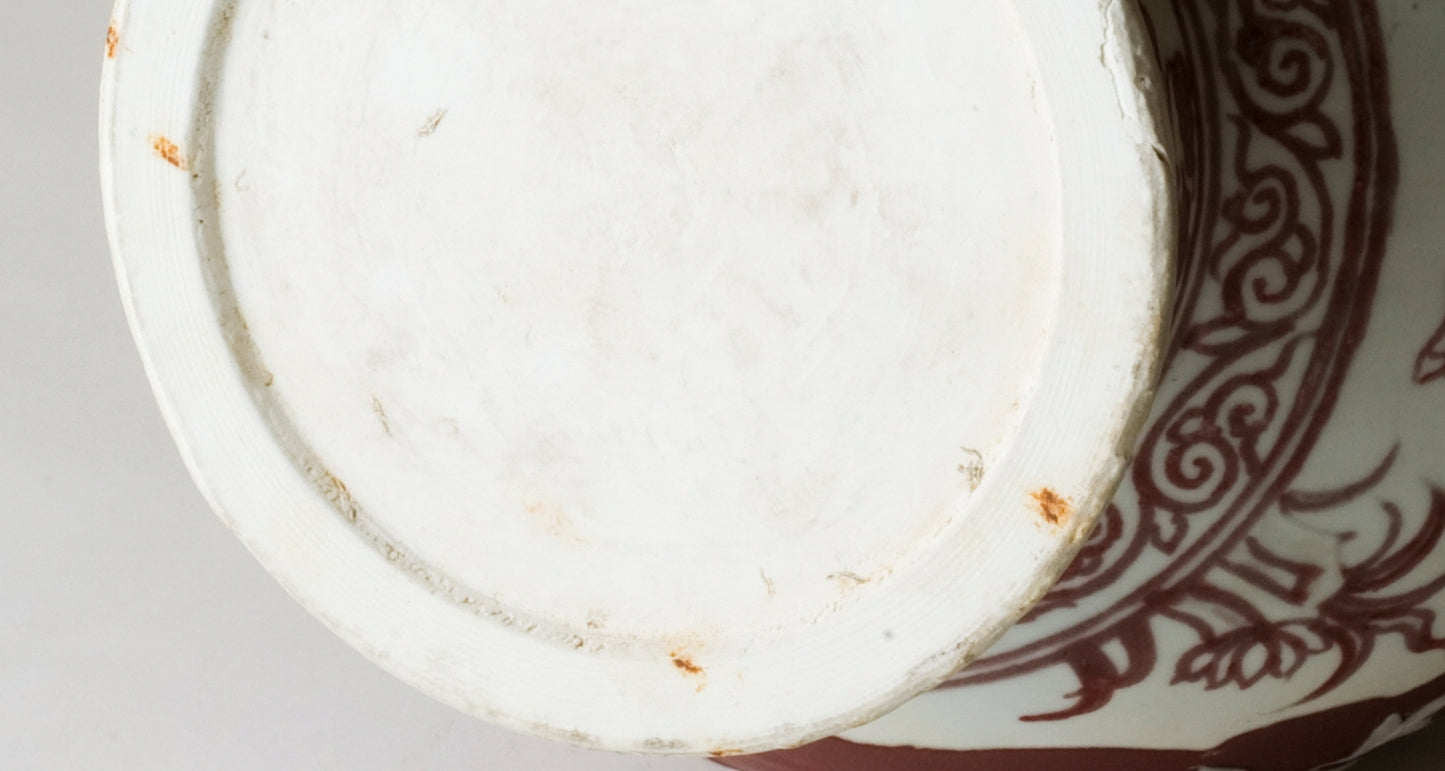
The foot is unglazed with a clean, dense white paste consistent with Jingdezhen production. Stylistic and technical evidence points to a high-quality civilian kiln commission of the Kangxi–Yongzheng period.
Period : Qing Dynasty(Presumably Kangxi or Yongzheng Period)
Type : Yuhuchunping
Medium : Red-glazed
Height : 50.0 cm
Condition : Excellent(slight salt residue remains on the surface, and the glaze is worn primarily around the edges, such as the handles and rim.)
Provenance: Southeast Asia, South China Sea in early 2000s
Reference : The MET - Accession Number: 24.80.258 - Vase with Dragon
(Type : related)
https://www.metmuseum.org/art/collection/search/42366
* Yuan–Ming Archaism in Qing Dynasty Ceramics
During the Qing dynasty, the deliberate revival of Yuan and Ming ceramic traditions represented far more than imitative craft — it was a sophisticated artistic and cultural project. Qing imperial kilns, particularly those at Jingdezhen, systematically studied and reproduced the formal vocabulary of earlier dynasties: the powerful cobalt blues of Yuan qinghua, the restrained elegance of Xuande wares, and the decorative exuberance of Wanli polychromes. This archaizing impulse, known as fanggu (仿古), was pursued with both technical mastery and creative ambition.
Such wares served multiple functions. Domestically, they satisfied an educated literati taste for antiquity and signaled cultural legitimacy through continuity with the dynastic past. For the export market, they met sustained overseas demand for Chinese antiquities, offering works of comparable aesthetic quality to earlier prototypes while reflecting the refined sensibilities of their own era.
Far from passive reproduction, Qing ceramicists reinterpreted inherited forms through the lens of contemporary technique — achieving greater precision in potting, consistency in glaze, and refinement in painted execution. The result was a body of work that honored its sources while constituting a distinct artistic achievement in its own right. This dialectic between tradition and innovation lies at the heart of Qing ceramic production, and accounts in no small part for its enduring prominence in both scholarly study and the international collecting market.