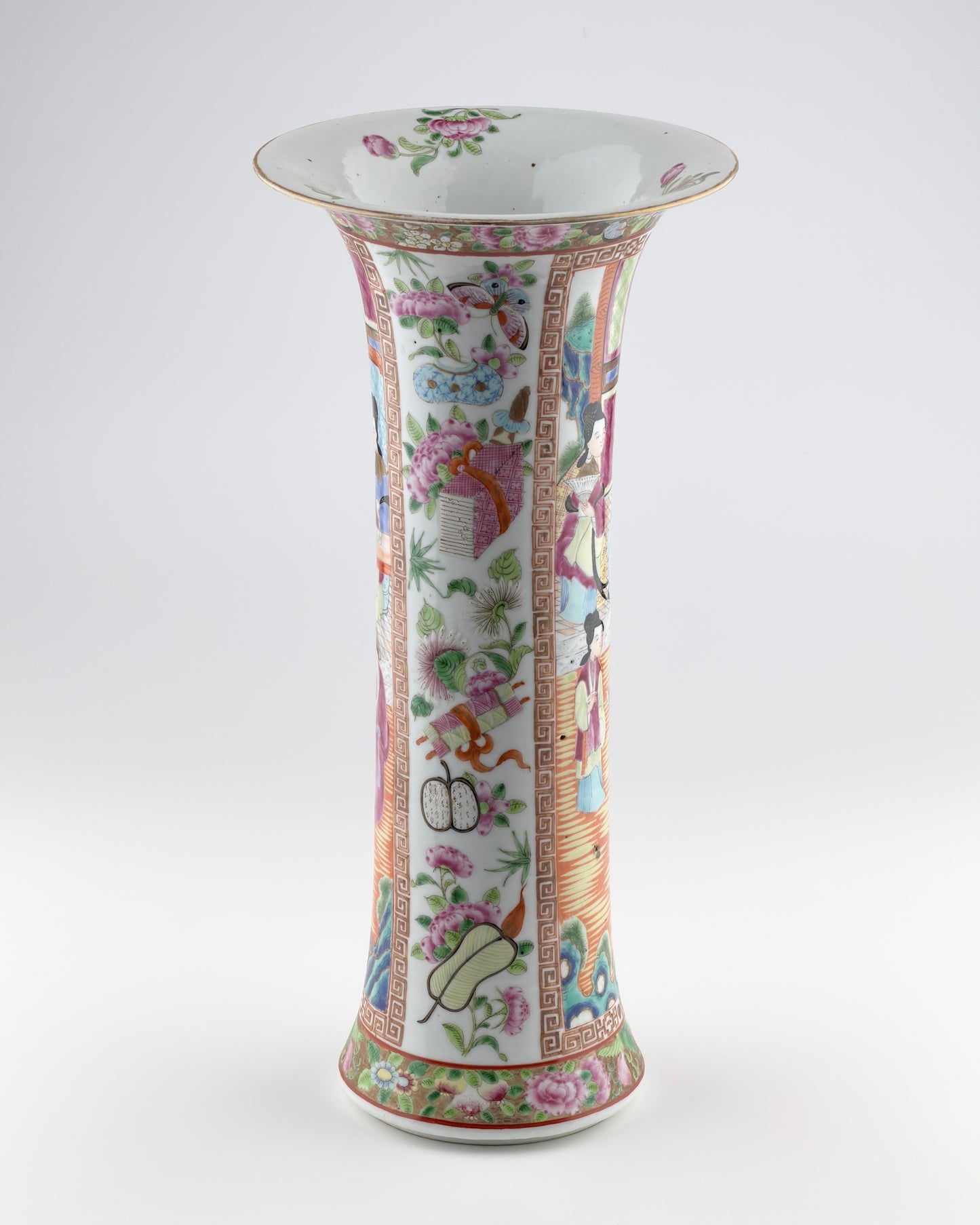
Rose Medallion Porcelain Vase, Late Qing-Republican Period
Rose Medallion Porcelain Vase, Late Qing-Republican Period
Couldn't load pickup availability
A rose medallion-style enameled porcelain vase with a flared trumpet mouth and elongated cylindrical body, its front panel framed in a rectangular reserve depicting a figural genre scene (a lady, her attendant, and a young boy) set against a garden backdrop, interspersed with key-fret (thunder pattern) borders and dense floral motifs of peonies, chrysanthemums, and butterflies, all rendered in the characteristic broad palette of pink, light green, turquoise blue, and ochre — a fine example of late 19th-century Cantonese export porcelain.
Period: Late Qing-Republican Period(19th century-Early 20th century)
Type: Vase
Medium: Famille rose
Size : 39cm(Height) x 18.5cm(Diameter)
Condition: Excellent
* Rose Medallion
Rose Medallion porcelain is a style of porcelain that became popular in the West during the 19th century, particularly in the Victorian era. This porcelain is characterized by its intricate and colorful decoration that typically includes themes of birds, butterflies, and people amidst floral motifs. The designs often feature a central medallion, which is surrounded by panels depicting various scenes. These panels can include figures in gardens or landscapes, which are separated by ornamental borders filled with flowers and fauna.
The term "Rose Medallion" refers to the prominent use of rose-colored tones in the porcelain, alongside a rich palette of greens, pinks, and golds. This style is part of a broader family of Chinese export porcelains designed specifically to appeal to Western tastes, which also includes Rose Mandarin and Rose Canton, each varying slightly in terms of design complexity and focus.
Rose Medallion porcelain items often include plates, bowls, vases, and tea sets, which were exported in large quantities to Europe and America. Collectors highly value these items today for their beauty and as a representation of cultural exchange between East and West during the period. The craftsmanship and detailed artwork make each piece unique, capturing the intricate aesthetics of Chinese artistry adapted for the global market.