Two Yixing Zisha Teapots and Covers
Two Yixing Zisha Teapots and Covers
Couldn't load pickup availability
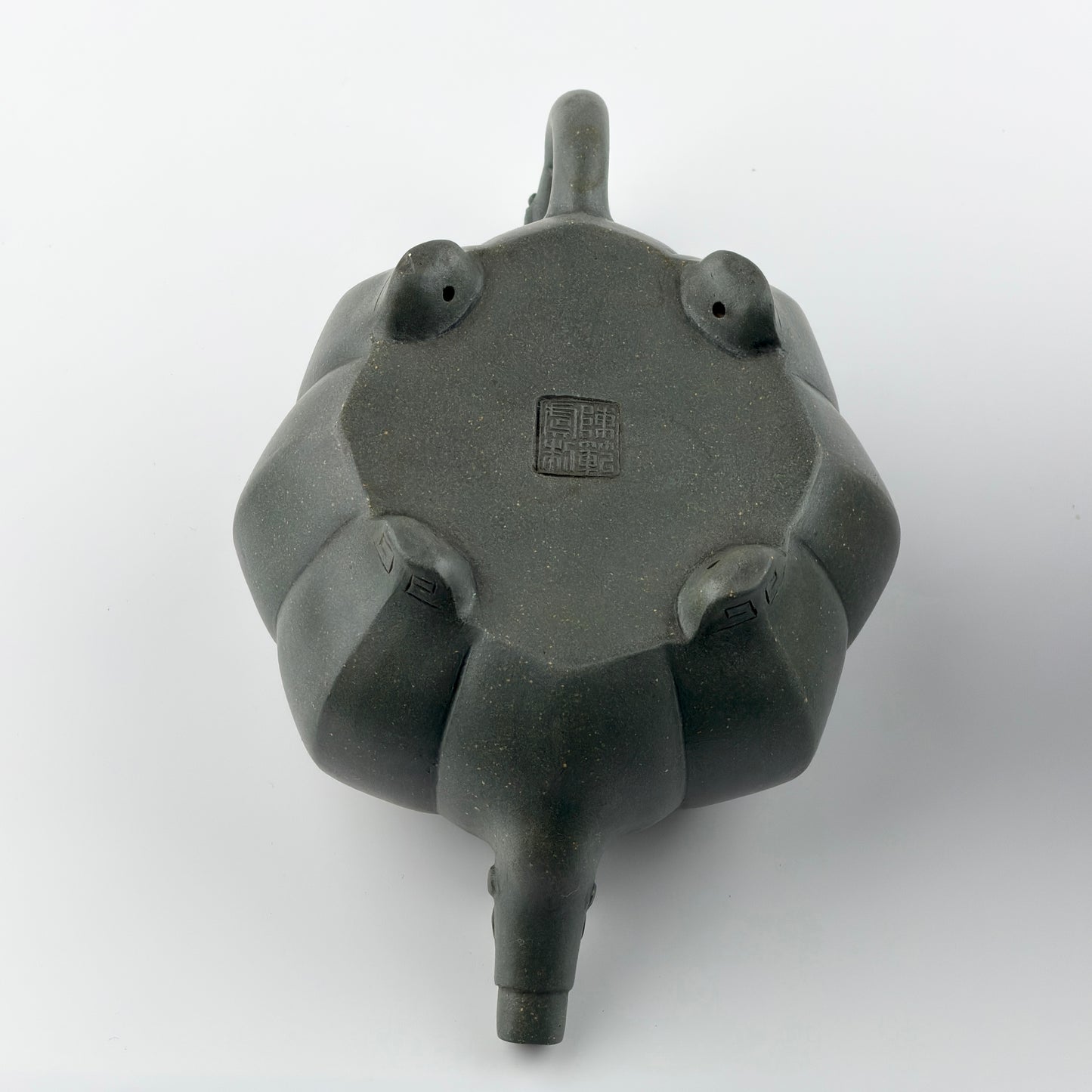
These two pieces are Chinese Yixing (宜興) zisha teapots. The one on the left is made of a grayish-green zisha clay, shaped like a ribbed pumpkin (nangua) form, with a spout carved into a beast-face shape and a loop-form handle; the lid knob is chrysanthemum-shaped, and the base has four short feet. The one on the right is a rounded zisha teapot in a dark reddish-brown clay, with a line of seal-script poetry incised on one side of the body and a relief carving of peonies and a dragonfly on the opposite side, with a scrolling vine-motif band decorating the edge of the lid. Both pieces show clear evidence of hand-forming rather than wheel-throwing, and each has an impressed seal mark on the base.
Period: Republican to Modern Period
Medium : Yixing Zisha(紫砂)
Type : Teapot
Size : 10cm (Height) x 7cm(Mouth Diameter)
Condition : Excellent
Provenance : Acquired in late 1990s from Hongkong
* Yixing Zisha Pottery Teapot
Yixing Zisha pottery are highly valued for their unique clay composition, exceptional craftsmanship, and deep cultural significance. These teapots are made from Zisha (紫砂) clay, which is exclusively mined in Yixing (宜兴), China. This clay is extremely rare and precious, known for its high porosity, which allows the teapot to absorb the aroma and flavor of tea, enhancing the tea's richness and depth over time. Unlike ordinary ceramics, Yixing teapots do not require glazing, maintaining a natural, smooth texture while ensuring even heat distribution, making them ideal for tea brewing.
Each Zisha teapot is 100% handcrafted, with a tradition that dates back to the Ming Dynasty (1368–1644). Unlike regular ceramics, they are not made using a potter’s wheel but are instead meticulously shaped and assembled entirely by hand, requiring a high level of artisanal skill. Particularly, master potters (名匠) create unique styles that are highly prized in the collector’s market, often fetching high prices due to their artistic and historical value. As a result, antique Zisha teapots and those crafted by renowned artisans are considered rare and invaluable works of art.
Beyond being a functional tea-brewing vessel, Yixing Zisha teapots are deeply intertwined with Chinese tea culture. Since ancient times, they have been favored by scholars, poets, and literati, symbolizing refinement, sophistication, and harmony with nature. Traditional motifs such as bamboo and plum blossoms reflect Chinese aesthetics and philosophical ideals, further enhancing the teapot’s cultural significance.
Today, high-quality Zisha clay is becoming increasingly scarce, and government restrictions on clay mining have significantly reduced production. Additionally, the declining number of skilled artisans trained in traditional techniques has made authentic Zisha teapots even rarer. For these reasons, Yixing Zisha teapots have evolved beyond mere tea-brewing tools; they are now appreciated as fine art and valuable investment pieces, with their worth continuously increasing over time.